Nestled between the Vosges Mountains and the Rhine River on the border with Germany, Alsace is unlike any other French wine region. Earlier this year, Mum and I spent several days exploring its picturesque villages, vineyard-covered hillsides and family-run wineries, returning home with a selection of wines that showcased the region’s incredible diversity.
A Region Shaped by History
To truly understand Alsace wine, you first need to understand Alsace itself.
With a winemaking history stretching back more than 2,000 years, the region has spent centuries moving between French and German control. This unique heritage can still be seen today in the architecture, food, language and, perhaps most importantly, the wines.
Unlike most French regions, Alsace labels wines by grape variety rather than village or vineyard. It is a distinctly Germanic approach that makes the wines wonderfully accessible to newcomers while still offering enormous complexity for wine enthusiasts.
Protected by the Vosges Mountains, Alsace is also one of the driest regions in France. The combination of abundant sunshine, cool nights and a patchwork of limestone, granite, sandstone, clay and volcanic soils creates wines with remarkable freshness, purity and character.
Today, thirteen grape varieties are permitted within the Alsace AOC, although white grapes dominate production. Riesling, Gewürztraminer, Pinot Gris and Muscat are considered the region’s “noble” varieties and are the only grapes permitted in Grand Cru wines.
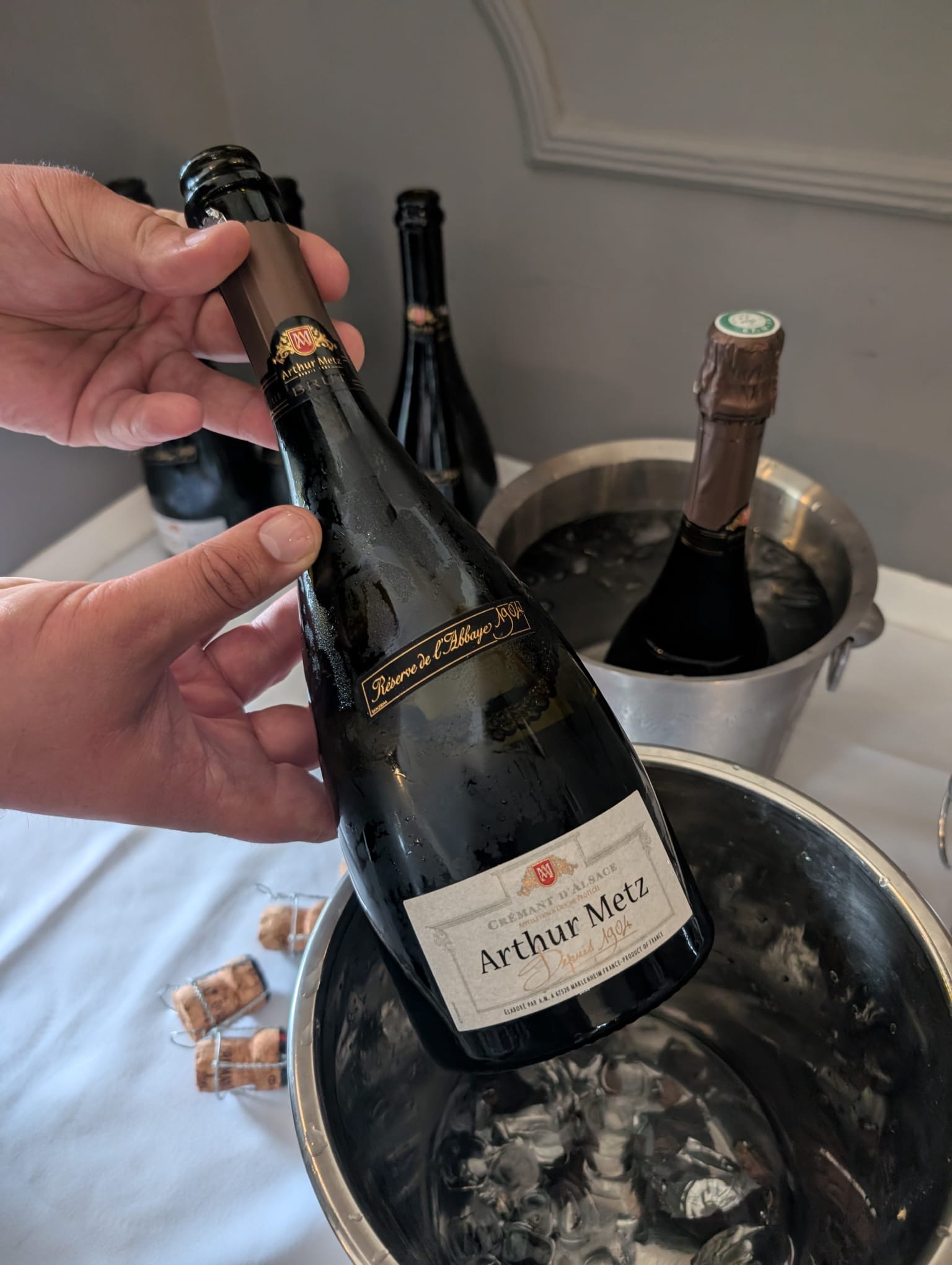
Starting with Sparkle: Arthur Metz Crémant d’Alsace
We began the evening with a sparkling wine from Arthur Metz, one of the largest and most respected producers in Alsace.
Crémant d’Alsace now accounts for almost a quarter of all wine produced in the region and is France’s second best-selling sparkling wine category behind Champagne.
The 1904 Cuvée has 24 months of lees ageing, double the legal minimum requirement. Predominantly Pinot Blanc, with additions of Auxerrois, Pinot Gris and Pinot Noir, it offered aromas of lemon sherbet and baked apple pie, followed by flavours of pear, citrus and apricot on the palate.
A perfect way to begin our Alsatian adventure.
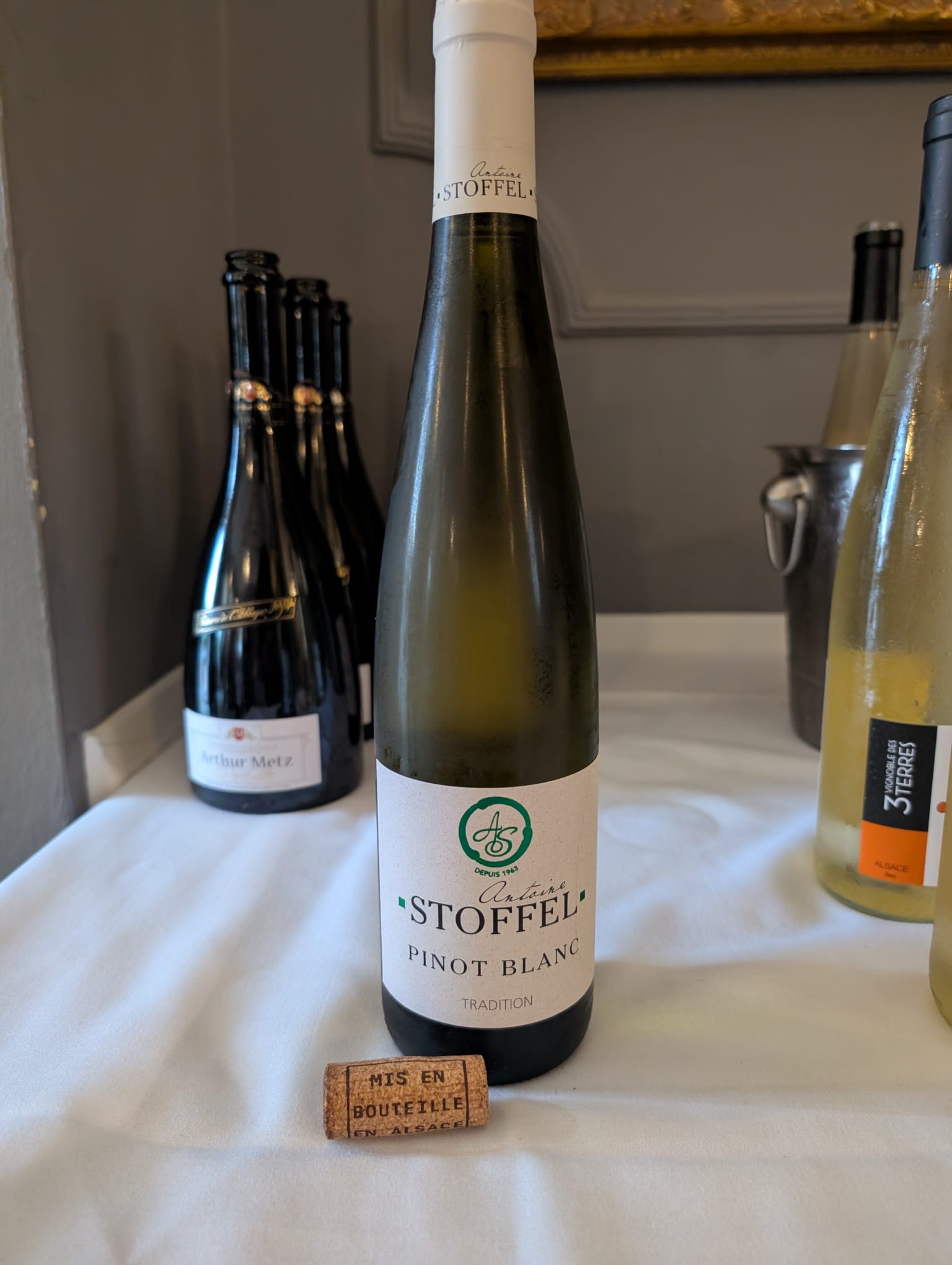
Discovering Pinot Blanc with Domaine Antoine Stoffel
Our second wine came from Domaine Antoine Stoffel, a family estate based in the beautiful village of Eguisheim.
The Stoffel family perfectly represents modern Alsace – combining deep-rooted family traditions with a new generation embracing innovation and modern winemaking. During our visit, we were fortunate enough to tour their newly developing winery and sample a range of their wines.
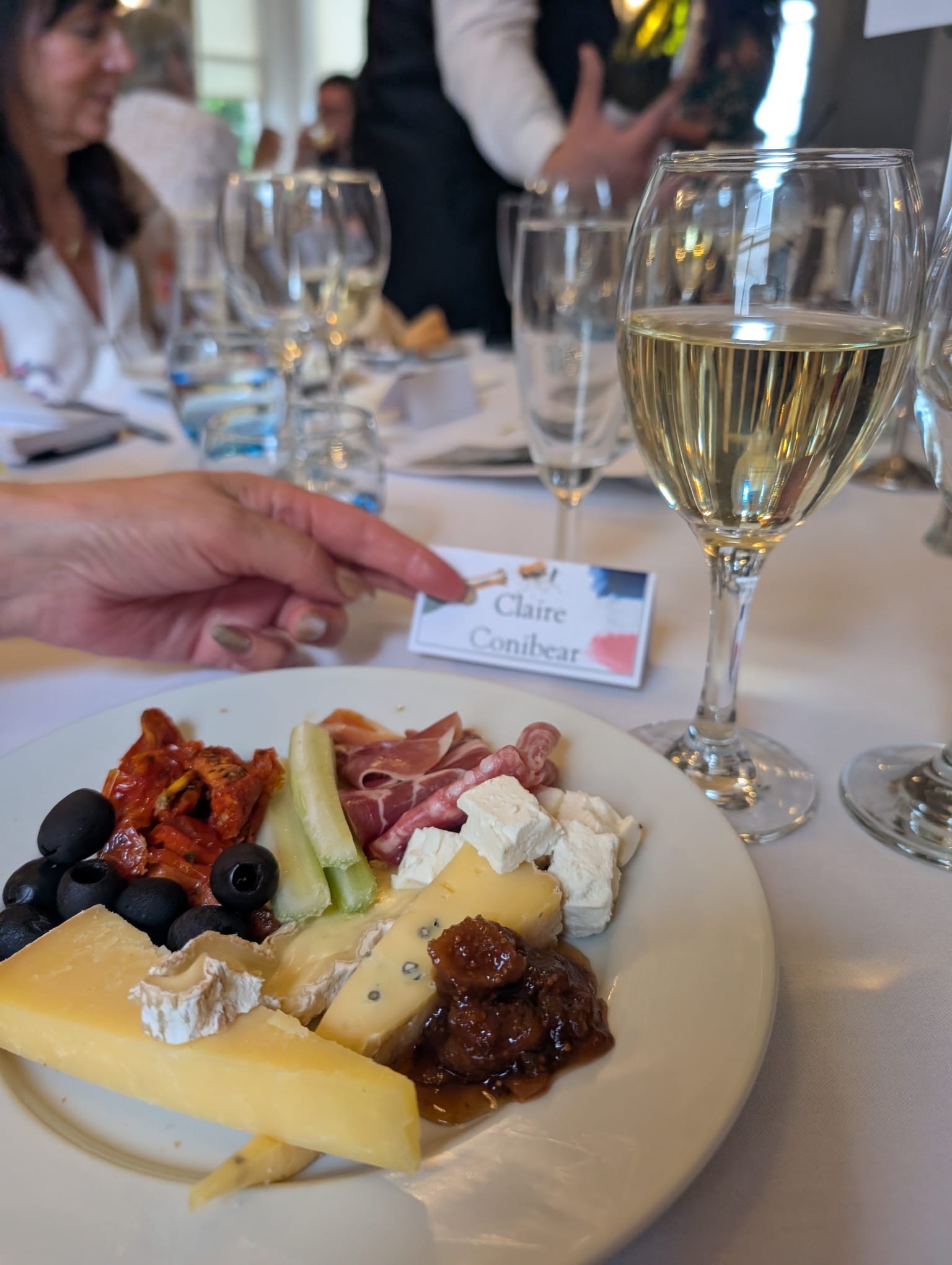
Their Pinot Blanc demonstrated exactly why this grape is so popular in the region. Fresh, approachable and wonderfully balanced, it offered gentle orchard fruit flavours, bright acidity and a soft, easy-drinking style that paired beautifully with both hard cheeses and creamy Brie.
A Blend of Alsace: Domaine Mann Méli-Mélo
Next came a wonderfully expressive blend from Domaine Mann.
The aptly named “Méli-Mélo” (meaning “mix-up”) combines Pinot Blanc, Muscat, Sylvaner, Gewürztraminer and Pinot Gris. This style is closely linked to the traditional Alsatian category known as Edelzwicker, a term derived from the German words for “noble blend.”
Aromas of white peach, pear and citrus zest were complemented by floral notes, soft spice and exotic fruit flavours. Gentle lees ageing added texture and complexity, making this a versatile food wine that paired particularly well with softer cheeses.
Gewürztraminer: Alsace’s Marmite Grape
No exploration of Alsace would be complete without Gewürztraminer.
Our fourth wine, from Cave de Turckheim, showcased why this grape divides opinion yet remains one of the region’s most iconic varieties.
Founded in 1955, Cave de Turckheim has built a reputation as one of France’s finest cooperative wineries. Their Gewürztraminer offered all the hallmark characteristics lovers of the grape seek: rose petals, lychee, Turkish delight, peach, honey and ginger spice.
While Gewürztraminer can sometimes become heavy or overly perfumed, this example retained freshness and elegance throughout.
Paired with blue cheese (or Munster cheese in its homeland) it demonstrated one of Alsace’s classic food and wine combinations.
The Red Exception: Pinot Noir from Saint-Hippolyte
While Alsace is famous for white wines, Pinot Noir remains the region’s sole permitted red grape variety.
To finish the evening, we tasted a powerful Pinot Noir from Saint-Hippolyte, a village renowned for producing some of Alsace’s finest red wines.
Situated beneath the imposing Haut-Koenigsbourg Castle, the vineyards benefit from warm sunshine and granitic soils that allow Pinot Noir to achieve exceptional ripeness.
This wine offered a very different expression of Pinot Noir than many guests expected. Rich and concentrated, it displayed flavours of black cherry, blackcurrant and spice, supported by smooth tannins and a long, velvety finish. At 14% alcohol, it demonstrated the depth and intensity that Alsace Pinot Noir can achieve in favourable conditions.