Wines from South America

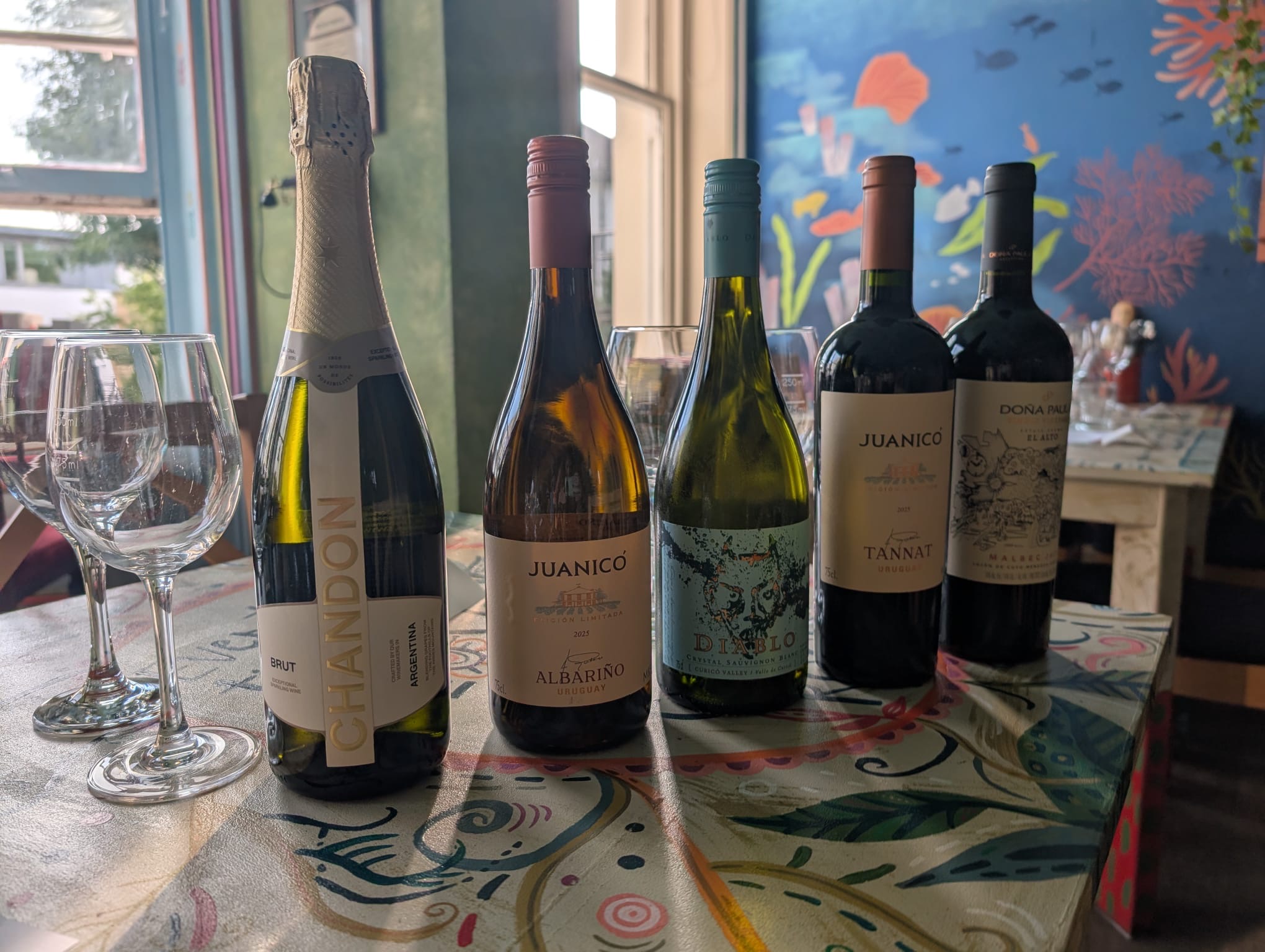
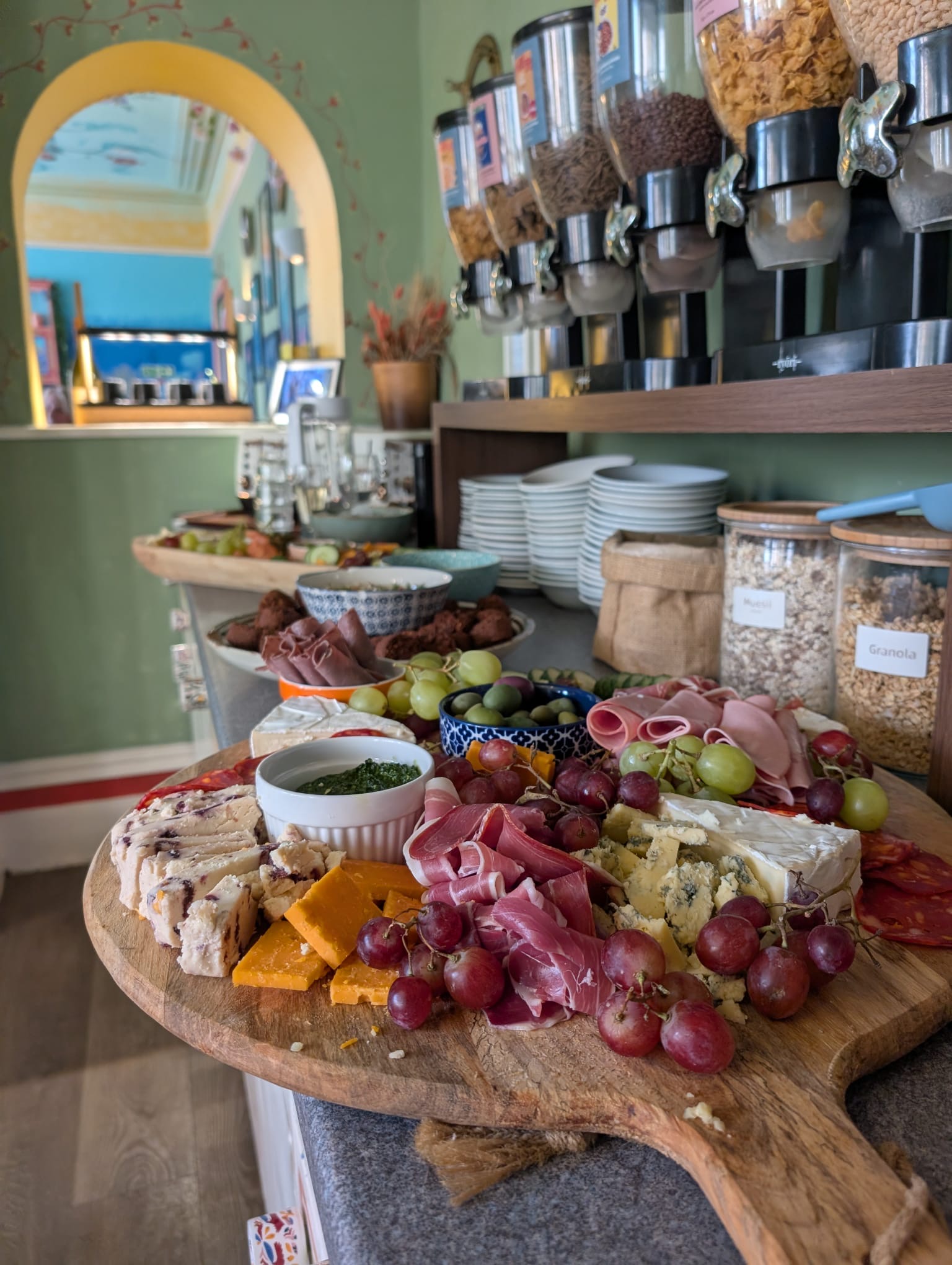
We spent an evening at a brand new venue for us, The Sheldon Hotel in Eastbourne, exploring one of the world’s most exciting wine regions. We tasted our way through Argentina, Chile and Uruguay, five wines that showed just how far South American winemaking has come. Steve and the team at the hotel also put on the most amazing spread for us all.

Furthermore, our charity raffle raised £215 for St Wilfrids Hospice! That is enough to support a nurse for a day – thank you so much everyone!

A Short History of South American Wine

South America’s wine story starts with the Spanish. Vitis vinifera cuttings arrived with missionaries, first reaching Peru around 1551 for sacramental wine, then spreading south into Chile and across the Andes into Mendoza, Argentina, by the mid 1500s. For centuries these were mostly workaday, high yield wines made for local consumption.

The shift toward quality began in the mid to late 1800s, when European vines (mostly French, arriving after phylloxera devastated European vineyards) and winemaking expertise came over alongside a wave of immigration: Bordeaux influence shaped Chile and Argentina’s Malbec, while Basque settlers brought Uruguay its Tannat.

The real international breakout came in the 1990s and 2000s, when foreign investment, modern winemaking and export driven quality pushes turned the continent from bulk wine territory into a serious fine wine source. Today Argentina and Chile sit just behind the traditional European giants and the US in global production volume.

Here’s what we poured.

The Wines

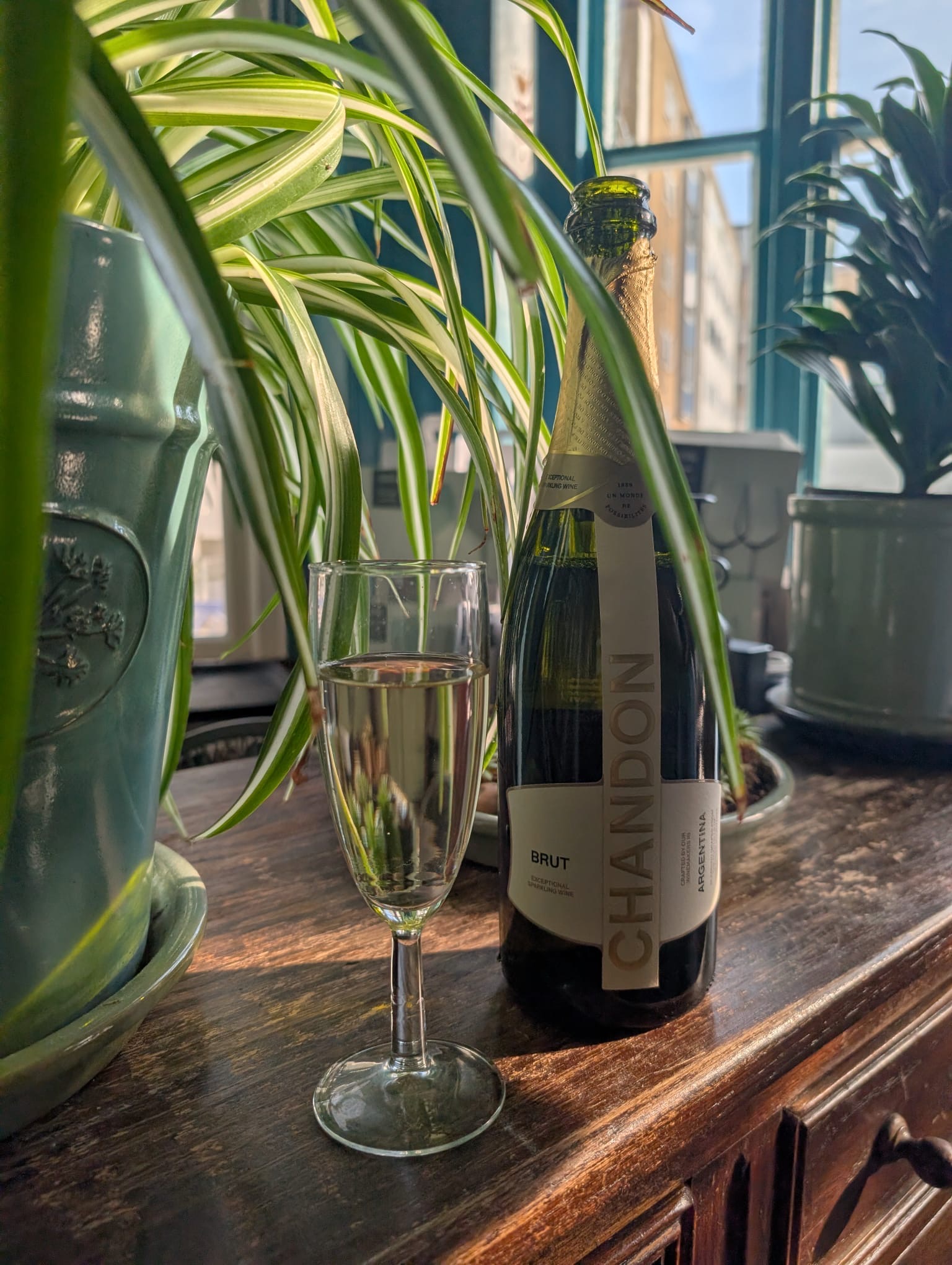
Sparkling: Chandon Argentina

Chandon Argentina was founded in 1959 as the very first international venture of Moët & Chandon, before Domaine Chandon California even existed. Chairman Jean de Vogüé sent winemaker Renaud Poirier hunting for a “new world” terroir outside Champagne, and Mendoza won. Chandon now has estates on four continents: South America (Argentina and Brazil), North America (California, USA), Australia (Oceania), and Asia (China and India).

Head winemaker Ana Paula Bartolucci puts it best: “There’s nowhere else quite like it on the planet. It’s an extreme climate, a desert. There are no bodies of water nearby to give a moderating effect. But what we do have are the magical, awe inspiring Andes mountains, a marvel of nature. They’re a 7,000m barrier between us and the Pacific, so we’re in a rain shadow. Vines thrive on limited water. They are also hardy plants that adapt well. But fruit does need some water. All our water is Andean meltwater. Our conditions give our wine a very special quality. You get wines with absolute, untainted purity of expression.”

The wine came from Agrelo, in Mendoza’s Luján de Cuyo, Argentina, where sunny days and cool nights at altitude, plus chalky soils, gave the base wines bright acidity and concentration, ideal for the traditional method.

It was a blend of Chardonnay and Pinot Noir, made using the traditional (Champagne) method of secondary fermentation in the bottle, with 18 months aging on the lees. That was followed by a minimum of three further months aging in the bottle before release, bringing the total aging period to over 21 months.

£16 from Sainsbury’s

White: Juanicó Albariño, Uruguay

Uruguay is very different to Argentina and Chile. It doesn’t have the altitude of the Andes, and it gets a lot of sun and rain, which makes keeping vines disease resistant a real challenge. What it does have is a cooling influence from the Antarctic currents in the South Atlantic. Uruguayans have long been avid wine lovers and drinkers, and this unusual country is now the fourth largest wine grower in South America, a position it’s growing into rapidly.

This particular wine came from Canelones, Uruguay, on the Juanicó estate, where vineyards sit less than 30 km from the Atlantic coast and the Río de la Plata, giving cool, maritime influenced fruit. Juanicó is one of Uruguay’s oldest and largest wineries, with the estate dating to the 1740s. In 1830, Juan Francisco Juanicó built an underground cellar there, the first of its kind in Latin America and still in use today. The estate was bought by the Deicas family in 1979 and is now run by the third generation, Santiago Deicas.

Albariño, the aromatic Galician and Spanish white grape, is still a rarity in South America, where it’s only just beginning to be recognised as a rising star for Uruguay. That’s largely down to the vine canopy methods used here: growers train the vines pergola style, so the grapes grow up and over, which keeps the fruit away from disease on the wet ground and protects it from sun damage too.

£10 from Marks and Spencers
White: Diablo Sauvignon Blanc, Chile

This wine came from the Central Valley, Chile, with fruit sourced from cool climate vineyards, often around Curicó, between the Maipo and Maule valleys, where coastal influence keeps the grapes fresh and rainfall helps with irrigation.

Chile was actually the first country in South America to export wine. Until then, most wine consumption was local. Today, with its Mediterranean climate and the cooling influence of the Humboldt current, it’s become one of the fastest growing wine countries around, with new varietals constantly being added. Many European wine experts have headed that way too, and the wines they’re making are superb. Chile’s isolation, protected by ocean, desert, mountains and ice, has also spared it from phylloxera almost entirely, meaning many vines here still grow ungrafted on their original rootstock.

The grape was Sauvignon Blanc: pale and crisp, with white peach notes upfront, turning soft and creamy through a long finish, light bodied and dry. Where New Zealand style relies heavily on vibrant tropical fruit, this one offered a savoury, herbaceous profile instead, closer to Sancerre or a Bordeaux Sauvignon Blanc.

The producer was Concha y Toro, founded in 1883 by Don Melchor de Concha y Toro and today Chile’s largest wine producer. Diablo is one of the house’s flagship export brands, sitting alongside its better known sibling label, Casillero del Diablo.

Fun fact: the Diablo name comes from a 19th century legend. Don Melchor kept losing his best bottles to light fingered staff, so he spread a rumour that the Devil himself lived in his wine cellar, or “casillero del diablo.” In deeply Catholic 1880s Chile, nobody dared go near it again, and the bottles stopped disappearing. The legend became the brand behind both the Diablo and Casillero del Diablo ranges.

£8 From Tesco

Red: Juanicó Tannat, Uruguay

This one also came from the Juanicó estate in Canelones, Uruguay’s cool, humid, maritime influenced heartland, and the same historic house as the Albariño above: Establecimiento Juanicó, run by the Deicas family.

The grape was Tannat, Uruguay’s national grape, named for its naturally high tannin levels. Tannat originated in the Basque region of the French Pyrenees, officially taking root in the Madiran AOC in 1783. It was historically known for intensely rustic, astringent tannins, its name derived from the Occitan word for tannin. Brought to Uruguay by Basque immigrants in the 1870s, it flourished, becoming the country’s beloved flagship grape.

It offered rich blackberry and fig notes with a floral edge, a brilliant partner for grilled meats or slow cooked casseroles.

Fun fact: before the Deicas family took over, the estate spent decades as a state run enterprise producing Cognac Juanicó under French license. Wine only became the focus after 1979.

£10 from Marks and Spencers

Red: Doña Paula El Alto Single Vineyard Malbec, Argentina

Argentina’s wine industry is built around the Andes. Mendoza, at the foot of the mountains, produces roughly two thirds of the country’s wine, with vineyards planted at striking altitudes (many over 1,000 metres, some above 1,500; for comparison, the South Downs sits at just 280 metres) that give big diurnal temperature swings, hot days and cold nights, producing ripe fruit with retained acidity.

Malbec is the calling card, a Bordeaux transplant that struggled in France’s cooler, wetter Cahors region (where it’s known as Côt) but found its true expression here, going from bulk grape to the country’s signature variety over the last few decades. Sub regions like Luján de Cuyo and the Uco Valley are now prized for site specific, single vineyard Malbecs.

This wine came from Finca El Alto de Ugarteche, in Luján de Cuyo, Mendoza, at 1,050 metres elevation, with sandy to clay loam soils and variable stone content that push the wine’s mineral character.

The producer, Doña Paula, was founded in 1997 by Chile’s Viña Santa Rita group, one of a small handful of wineries that helped set the benchmark for luxury Argentine Malbec.

Fun fact: the winery is named for Paula Jaraquemada, a real historical figure who sheltered 120 soldiers, both Argentine and Chilean, fleeing capture during the South American wars of independence. Naming the estate after her was a deliberate nod to the shared history between the two countries.

It was 100% Malbec, unblended, from the best plots of the estate’s original El Alto vineyard, a single vineyard bottling meant to let that specific site, and no other, speak. The skins were vinified and macerated in concrete vessels for 21 days, followed by 12 months aging in French oak barrels, 20% of which were new and the rest of various ages.

It offered blackberry, plum, violets and spices, with soft notes of mocha and tobacco. Fresh and round, with a long, satisfying finish.

£17 from Waitrose (currently on offer for £12.50 when writing this – run don’t walk!)

Book into our next events here
0 Your basket £0.00

Keep In Touch